The safety of pedestrians on Colorado roads has become a serious and growing concern. For anyone living or driving in the Denver area, being aware of Denver pedestrian accident law is essential.
In 2024 alone, the Colorado State Patrol responded to 219 crashes involving a vehicle and a pedestrian, representing an alarming 25% increase from the previous year. Tragic statistics show that the number of pedestrian fatalities in Colorado has risen by 88% over the last decade, with 120 deaths recorded in 2024. These numbers reflect an increasing impatience and distraction among drivers, putting everyone on foot at greater risk.
When a pedestrian is involved in a collision, the critical legal question often revolves around right-of-way and duty of care.
The Rules of the Road: Right-of-Way in Colorado
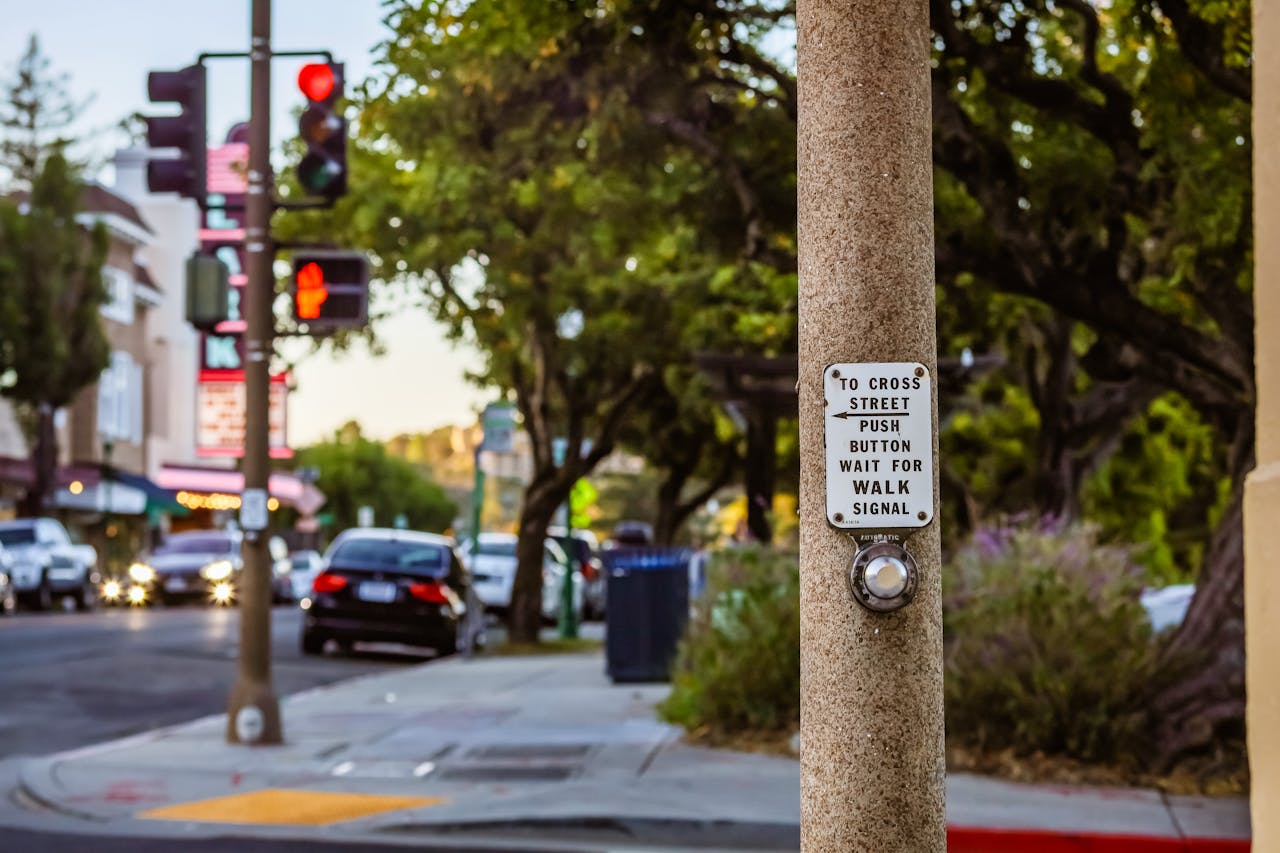
- Lawfully in the Crosswalk: If a pedestrian is legally crossing at an intersection (for example, with a “walk” signal) all motorists are required to proceed with due regard for the pedestrian’s safety. In this specific circumstance, the pedestrian may assume that drivers will follow the law and yield.
- Jaywalking: If a pedestrian is not lawfully in the crosswalk or intersection (often referred to as “jaywalking”), the pedestrian is required to yield the right-of-way to all motorists.
The Most Important Exception: Duty of Reasonable Care
It is important to understand that even when a driver has the preferential right-of-way (such as when a pedestrian is jaywalking), the driver is never relieved of the duty to exercise reasonable care for the safety of others.
At Law One, we have successfully recovered for clients who did not have the right of way, but still recovered because the driver didn’t use reasonable care. Consider these examples from our experience with Denver pedestrian accident law:
Example #1: We recovered for a teenage pedestrian who was clearly jaywalking across a busy street after being hit by an elderly motorist. We were able to demonstrate that even though the pedestrian was technically at fault for jaywalking, the driver still had a duty to exercise reasonable care to avoid the collision.
Example #2: In another case, we successfully recovered a significant amount for a teenage boy who was traversing a crosswalk against traffic, as a funeral procession had the right-of-way. We proved that the hearse driver had the last clear chance to avoid striking the boy, meaning the driver’s failure to exercise that final duty of care made them liable.
The Final Takeaway for Drivers and Pedestrians
As both a driver and a pedestrian, you must remember that the right-of-way is relative, never absolute. Every person operating a vehicle or walking on the road has a non-negotiable duty to exercise reasonable care to safeguard the safety of others.
If you or a loved one are injured in a motor vehicle accident while lawfully crossing the street, you may be entitled to recover against the driver and, more importantly, the insurance company that covers that driver. If the at-fault driver is uninsured, a pedestrian who carries an automobile policy with Uninsured Motorist coverage can often make a claim on their own insurance policy.
Contact Law One Today
The legal complexities surrounding Denver pedestrian accident law are significant. If you or a loved one have been injured, it is vital to know your rights and next steps. For a consultation regarding your specific situation, please call Law One today at 303-831-8313.